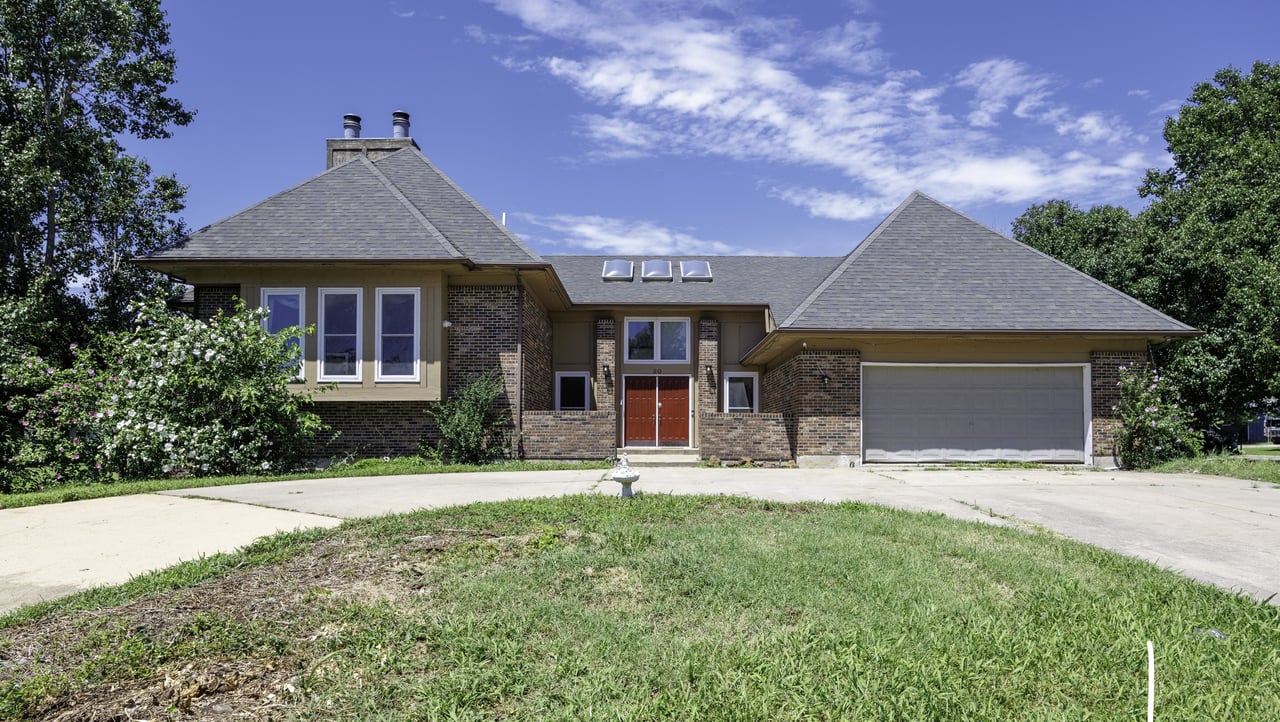
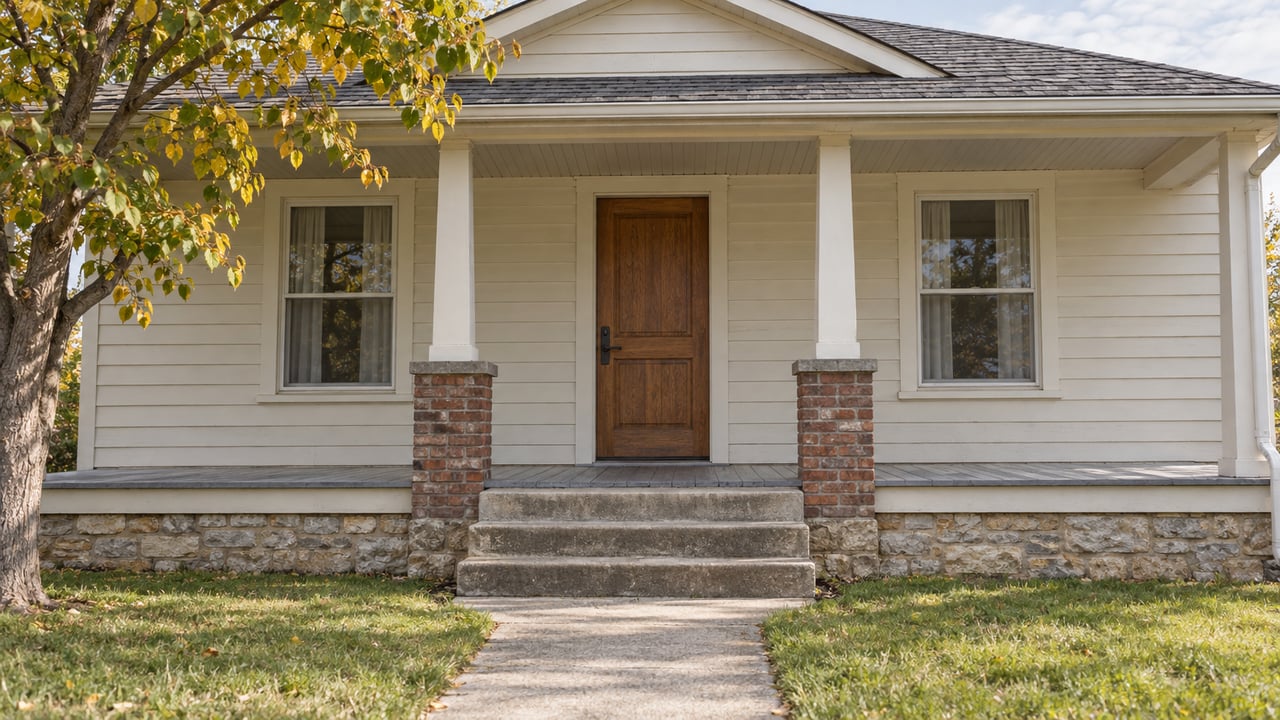
Independence will pay part of the cost of a new roof, siding, windows or a porch repair on a qualifying home. Since September 10, 2026, more homes qualify. The City Commission raised the eligible home value from $100,000 to $150,000 and added a higher reimbursement tier for lower-income households. Three things decide whether a home can use the money: the order of events after closing, a number in county records the buyer never negotiated, and the person who lives next door.
The Roof You Replace the Week After Closing Doesn't Count
Under the City of Independence's Neighborhood Exterior Grant Program guidelines, work can't start until the grant is approved, and nothing done before that date counts toward the project cost. Earlier improvements aren't eligible either. Applicants also have to be owners of record. So a buyer can't line up the grant during escrow and have a crew on the roof the day after closing.
Here is the order the program requires:
- Close on the home and become the owner of record.
- Make sure property taxes and any City utility bills in your name are current, and have proof of adequate insurance.
- Pass a minimum exterior inspection. Any failed item has to be fixed before approval or included in the proposed work.
- Submit your application along with your neighbor's. The application isn't complete until both arrive, and the City says it will notify applicants within 30 business days after that.
- Start work within 120 days of approval and finish within 120 days of starting. Extensions need written approval before the deadline passes.
- Turn in all labor and material receipts at once, then pass a City post-project inspection.
Thirty business days is about six weeks. If a buyer's inspection turns up a tired roof, the repair either waits for that window or gets paid for in full without the grant. For a house that's weathertight today, waiting may cost nothing. For a house that isn't, it's a real decision to make before closing, and it changes how a buyer might weigh a repair credit against a price reduction.
The Line Is the County's Number
A home qualifies in one of two ways. It's valued at $150,000 or less in Montgomery County records, or the county gives it a Condition, Desirability, and Utility rating of Average Minus or below. It also has to sit outside a flood plain. Both numbers are public on the Montgomery County parcel search, and the City's guidelines send applicants there.
The sale price doesn't appear anywhere in that test. That matters because county values and sale prices don't line up one to one. The Kansas Department of Revenue's 2025 Final Ratio Study divides the county's appraised value by the actual sale price for each validated sale. For Montgomery County residential sales in calendar year 2025, the median ratio was 92.89 across 328 valid sales.
Here's what that ratio means in dollars. A home appraised right at the 2025 county median ratio and selling for about $161,000 would carry a county value of roughly $150,000. So in a typical case, a house that sells a little above the program's line can still sit under it on paper.
The same study shows why "typical" can't be the whole answer. Montgomery County's coefficient of dispersion, which measures how far individual ratios spread around that median, was 16.49 for 2025 residential sales. Two homes with the same sale price can carry quite different county values. The median tells you the program may reach further than the $150,000 headline suggests, but only the parcel record tells you whether a particular house qualifies. On the county's process, Appraiser Melody Kikkert reported at the August 24, 2026 county commission meeting that Montgomery County scored 100 out of 100 on the state's 2026 appraisal compliance review.
The CDU route works on condition, not value. A higher-value home the county rates Average Minus or below qualifies on that rating alone. The homes that need exterior work the most can reach the program even if their value is above the line.
Then You Need the House Next Door
No one applies alone. Every applicant needs a neighbor within line of sight as a co-applicant, and the City won't accept single-property applications. Each co-applicant has to put at least $1,000 into eligible work.
Each neighbor is evaluated on their own and can land in a different tier.
| Homeowner investment |
Standard Grant, 50% |
Enhanced Grant, 75% |
| $1,000 minimum |
$500 |
$750 |
| $5,000 |
$2,500 |
$3,750 |
| $10,000 or more |
$5,000 maximum |
$7,500 maximum |
The Enhanced tier is for households at or below HUD's current 60% Area Median Income limit. In HUD's FY2026 HOME table for Montgomery County, effective June 1, 2026, that limit is $36,000 for one person, $41,160 for two, $46,320 for three and $51,420 for four. The Independence Housing Authority makes the final income determination and can be reached at 620-332-2536. According to the application, the Enhanced tier applies only to owner-occupied homes.
For a buyer, this turns the house next door into part of the deal. The neighbor's own eligibility, finances and interest in a $1,000 project all decide whether the program is open to you. A block where both homes need gutters or paint has a ready-made pairing. A buyer who expects to rely on the grant for a specific repair can't count on it until that partner exists.
What the Money Covers and What It Skips
The eligible list centers on the shell of the house: façade restoration, exterior paint or siding, masonry, windows and doors, awnings, gutters, exterior lighting or electrical work, building additions, front porch repair, roofs, driveways, and attached or detached garages. Landscaping and tree removal count, but each is capped at 20% of the project unless it ties to structural integrity.
The ineligible list rules out several projects new owners often take on first, including fences, decks, patios, play equipment, pools and spas, workshops, storage sheds, greenhouses, and detached hobby rooms or offices.
Three rules shape the budget more than the lists do:
- Contractors. Anyone doing the work needs a current Independence occupational license, plus a professional license where one applies.
- Labor. The application says the program "will only reimburse the labor costs of the labor provided by a third-party contractor," but it also asks for material receipts. Weekend do-it-yourself work doesn't fit that wording. Confirm with City Hall how materials are treated before you build a budget around a reimbursement figure.
- Accessory dwelling units. An ADU paid for with grant money has to be rented in compliance with City code for five years, or the funds must be repaid.
Why the City Built It Around Pairs
The program was set up by City Commission resolution on March 11, 2021. By March 2024, the City reported more than $175,000 awarded, nearly 50 projects, and over $400,000 in improvements to Independence homes. Because homeowners pay part of every project, total spending came to more than twice the grant dollars. "Success stories are not just about numbers; they're about the revitalization of our neighborhoods and the sense of pride that comes with it," Commissioner Dean Hayse said at the time.
The pairing rule pushes in the same direction. Two homes in view of each other get improved in the same cycle, so the change shows up on a block instead of at one address. In its September 2026 announcement, the City said commissioners see the program as a way to improve neighborhoods, encourage private investment and prevent property deterioration. It also said plainly that the grant "does not impact and is in no way related to property tax." The jump from $100,000 to $150,000 brings in homes the earlier limit left out. In the City's 2024 notice, the value test was still under $100,000.
Funding is first come, first served until it runs out. The posted guidelines say each program year begins March 1. The City hasn't published how much remains for 2026, so a buyer closing this fall should ask City Hall at 120 N. 6th St. rather than assume either way.
Questions Buyers Ask About the Grant
What if the previous owner already used it?
Assistance is limited to $5,000 under the Standard Grant or $7,500 under the Enhanced Grant in any five-year period. On a home that was recently re-sided or re-roofed, ask the seller whether City grant money paid for it, and confirm with the City how that limit applies after a sale.
Can an investor use it on a rental?
The program allows rentals, and every participating rental needs a landlord license. The Enhanced tier is limited to owner-occupied homes. Duplexes, triplexes and ADUs are eligible property types, and apartments aren't.
Does each unit in a duplex count separately?
Each structure with its own 911 address and separate utilities can file its own application.
If you're weighing an older home in Independence and want to know whether its county value, its condition rating and the house next door give you a realistic path to this grant, Kristina Fulk can pull the parcel record with you and build that timing into your offer. Get Your Instant Home Valuation, and we'll talk through what the exterior work is worth before you commit to it.
This article is general information, not legal, tax or financial advice. Consult a qualified professional about your situation.